
AI-Driven Knowledge Management
Milkinside partnered with Pryon, an enterprise AI company, to design a knowledge management web application. Our goal was to democratize workplace knowledge, making it not just accessible but actionable through AI-driven interactions.
Role
Experience Designer
With
Milkinside
Client
Pryon
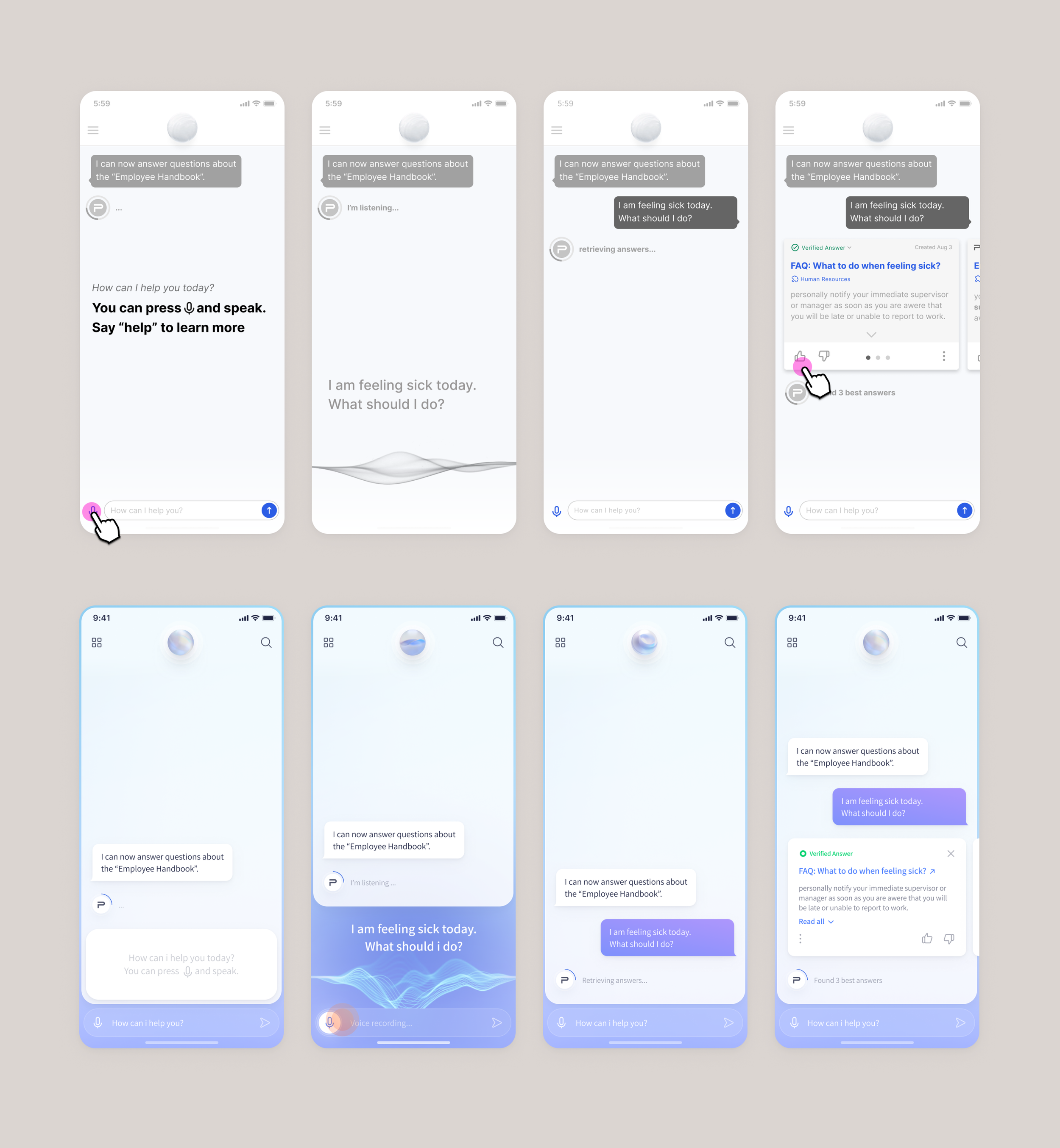
Engagement through Intelligent Response
Challenge
The dual objectives were to offload repetitive query-based tasks from employees to an intelligent system and refine the AI’s decision-making capabilities through real-time interaction data. The overarching aim was to promote user engagement by ensuring that the AI system could generate insightful, value-added responses.
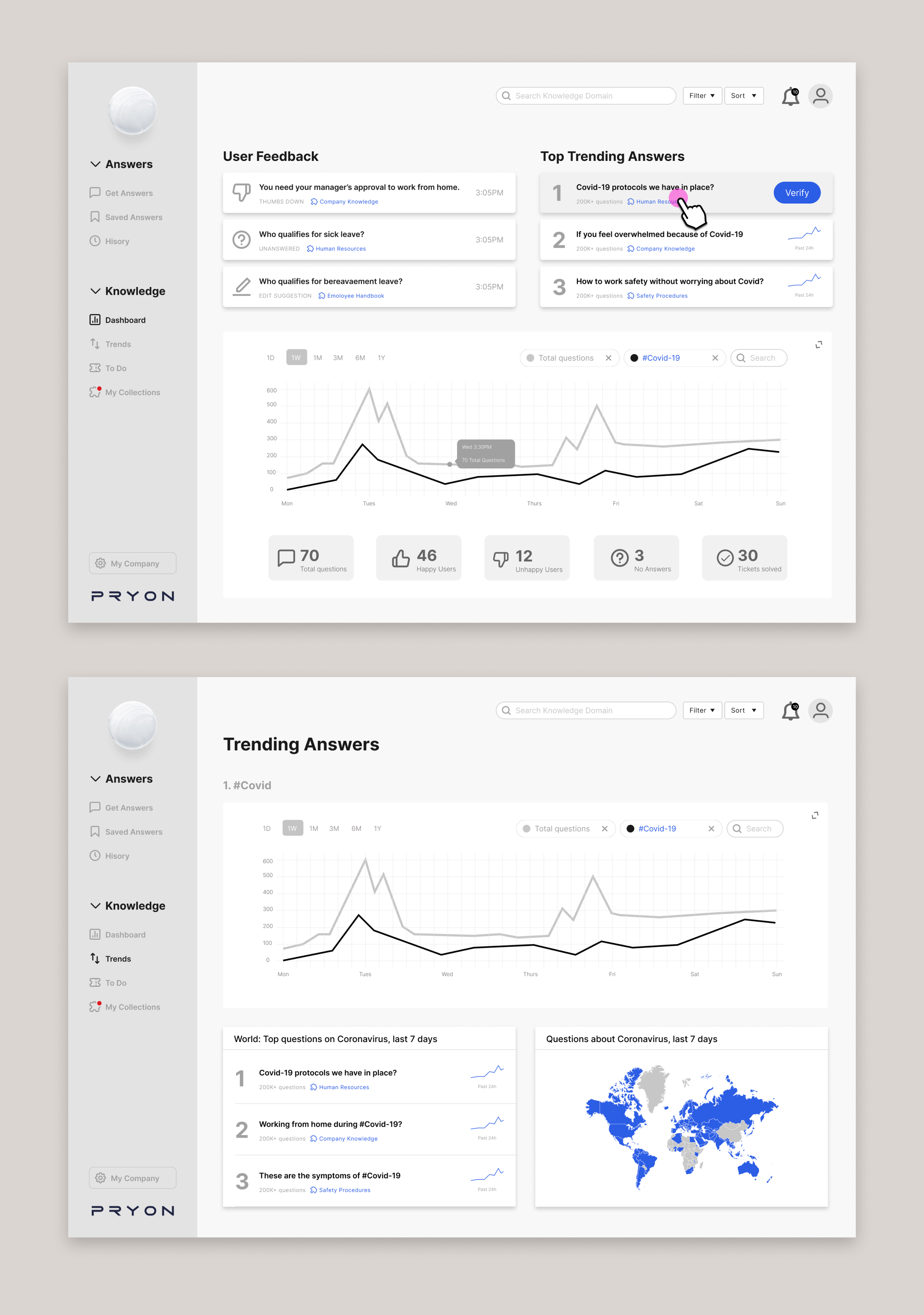
Iterative Design, Inclusive Decisions
Approach
We initiated the project with an emphatic focus on stakeholder involvement, recognizing that Pryon's intimate understanding of their users and business objectives would be pivotal. The design process was highly iterative; we began with workshops for co-creating user journeys and user flows. These activities fueled our transition from low-fidelity conceptualizations to high-fidelity screens, with continual client and user feedback loops to maintain alignment with key objectives.
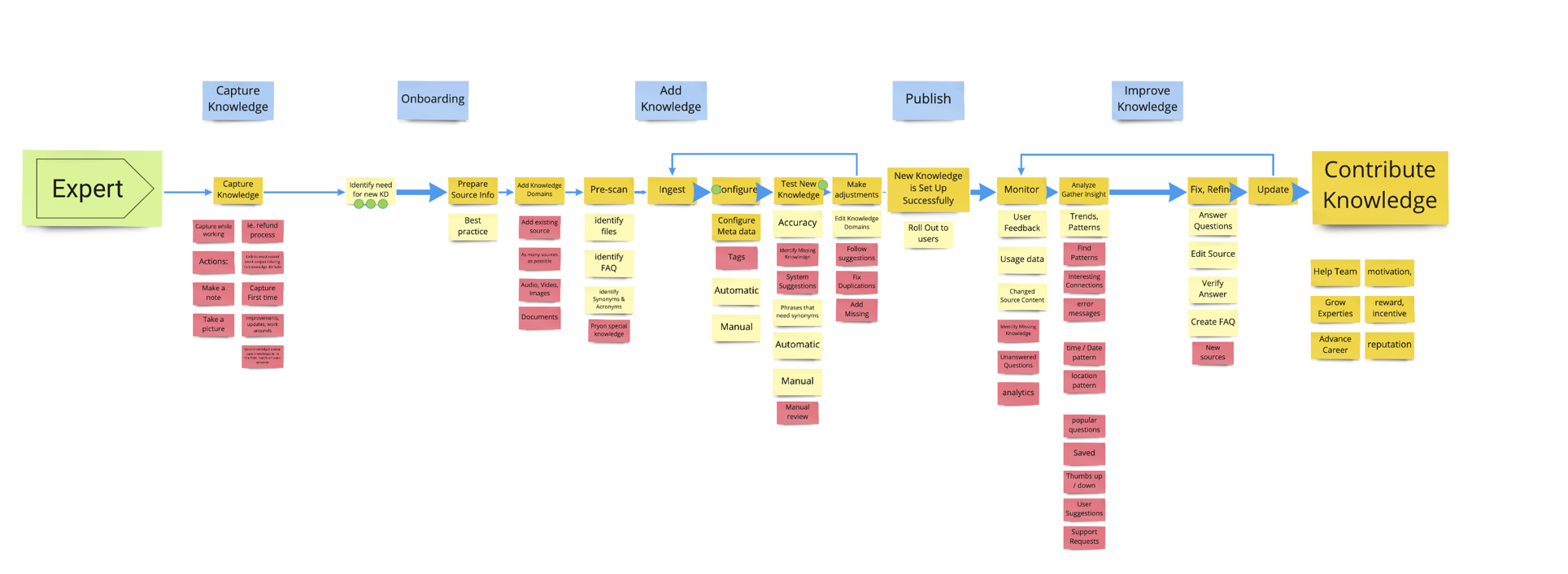
Smart, Scalable, Adaptable UX
Solution
We designed an integrated UX solution that transcended mere information retrieval. We introduced a smart AI assistant backed by a dynamically updated knowledge management system. An embedded interaction framework allowed for real-time feedback and AI training, making the platform not only scalable but also adaptable to evolving domain expertise.


Reflection
Lessons in Collaboration
Throughout this project, I expanded my skills in co-designing solutions with clients and internal teams, and saw firsthand the value of bringing client insights into the design process.
Working on AI-driven experiences before they became mainstream gave me an early appreciation for how user interaction could shape the technology itself. Designing the feedback framework reinforced this: every piece of feedback helped the assistant improve its next answer, so engagement and accuracy could grow together. It laid the foundation for how I design AI products today.